
Maintaining a safe, attractive, and functionally balanced residential landscape requires a consistent commitment to grounds management that extends far beyond standard lawn mowing and garden bed weeding. Mature shade trees, ornamental hardwoods, and foundational plantings represent some of the most prominent, valuable biological assets on any property. They frame architectural elevations, provide essential summer shade that reduces domestic air conditioning loads, shield outdoor living areas from high winds, and contribute significantly to overall neighborhood appeal and real estate equity. When outdoor vegetation thrives within a planned maintenance program, root systems anchor hillside soils against erosion, overhead canopies filter environmental dust, and the entire landscape presents an orderly, welcoming atmosphere.
Achieving lasting landscape health and structural security requires adopting an integrated, trade-aligned approach to property stewardship. Property owners who treat vegetative maintenance as a continuous cycle—incorporating proactive soil health, diagnostic pruning, structural stabilization, and prompt debris management—protect their property from sudden physical hazards while maximizing long-term aesthetic beauty. Aligning with certified arboricultural professionals and dependable debris collection teams turns an unpredictable yard into a resilient, well-tended outdoor space that enhances family comfort and endures through every season.
Establishing Foundational Soil Health and Proactive Canopy Oversight
A thriving residential landscape begins deep within the subterranean soil biome where fine feeder roots absorb water, nitrogen, and essential micronutrients. In suburban developments, heavy machinery compaction, high-alkalinity concrete leaching, and thick turfgrass competition routinely restrict oxygen exchange, suffocating tree root zones and inducing chronic stress. When root systems weaken, upper branches exhibit premature dieback, foliage turns chlorotic, and the plant becomes vulnerable to opportunistic insect infestations like wood-boring beetles and aphids.
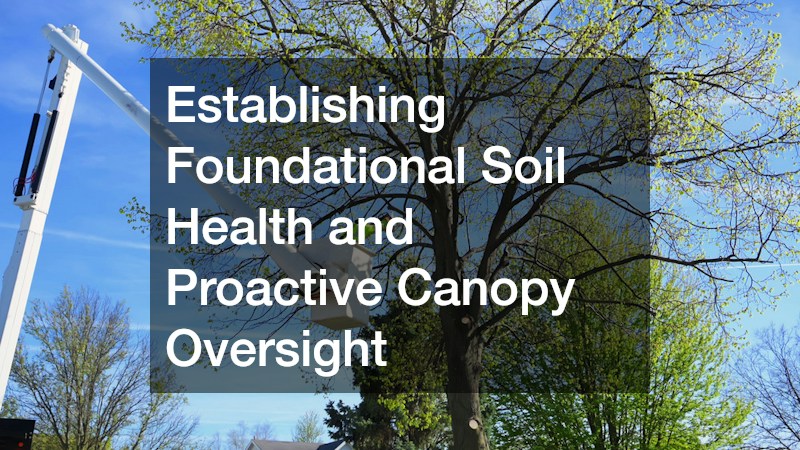
Committing to comprehensive tree care provides a scientific, preventative baseline that protects woody perennials from declining into hazardous decline. Certified plant health care specialists perform soil core testing to evaluate soil density and pH levels, applying pneumatic air-spades to decompact soil within the critical root radius without severing fibrous feeder roots. They inject slow-release, low-nitrogen bio-stimulants, beneficial mycorrhizal fungi, and organic compost amendments deep into the root zone to restore soil biology and improve water absorption. Regular monitoring of leaf color, bark integrity, and seasonal growth rates allows homeowners to catch biological distress early, keeping valuable shade trees vigorous, resilient, and structurally sound for decades.
Applying Structural Bracing and Root Shielding for Historic Specimens
Large, heritage shade trees—such as centenarian white oaks, sugar maples, and towering American elms—possess immense architectural and emotional value that off-the-shelf nursery saplings cannot replicate for generations. Yet, mature trees frequently carry structural imperfections developed over decades, including co-dominant leaders with included bark, expansive heavy lateral limbs, or internal trunk cavities created by old decay pockets. When high-velocity windstorms or heavy winter ice coat these massive limbs, uneven mechanical leverage can split main trunk crotches clean apart, destroying the specimen and endangering nearby residential structures.
Investing in targeted tree preservation techniques allows arborists to stabilize compromised structural unions without cutting down the tree. Specialists install dynamic, flexible synthetic cabling systems high within the upper canopy, linking divergent leaders together so they support one another during severe wind sway without restricting natural wind-dampening movement. For severe structural splits, technicians thread heavy-duty steel support rods through co-dominant stems, backing the hardware with wide steel washers that distribute mechanical loads across the wood grain.

Engaging Certified Field Crews for Comprehensive Grounds Management
Managing a multi-acre property, dense residential woodlot, or an overgrown suburban lot filled with mixed deciduous and evergreen trees demands heavy commercial equipment, specialized rigging gear, and advanced technical training. Attempting to handle large-scale canopy pruning, heavy limb removal, or disease remediation with consumer-grade ladders and homeowner chain saws carries high risks of severe personal injury, catastrophic falls, and electrical shocks from overhead utility lines.
Partnering with accredited, fully insured tree services ensures that all canopy work is performed in strict adherence to ANSI A300 pruning standards and OSHA safety guidelines. Professional arboricultural firms send teams led by ISA-certified arborists equipped with modern bucket trucks, track-mounted spider lifts, heavy-duty chippers, and synthetic lowering friction devices. These skilled tradespeople perform canopy audits, check for hidden fungal conks, and execute clean, anatomical cuts outside the branch bark ridge to promote natural compartmentalization.
Pruning Overextended Branches to Eliminate Structural Hazards
Unchecked branch growth along the perimeter of residential roofs, chimneys, and garage dormers presents a continuous physical threat to building envelopes. In heavy winds, stiff hardwood branches act like abrasive scour pads against delicate shingle surfaces, scraping off protective mineral granules and exposing underlying asphalt mats to sun rot and leaks. Furthermore, overhanging branches provide an open aerial bridge for squirrels, raccoons, and rodents to access attic vents, while shedding organic litter that rots inside gutters and causes foundation-saturating rainwater overflows.
Scheduling regular tree trimming establishes clear physical separation between tree crowns and residential building surfaces. Professional climbers navigate the canopy using modern ropes and saddles, carefully cutting back encroaching branches to provide a minimum ten-foot safety clearance from roof planes, window glazing, and overhead secondary utility leads. Technicians selectively remove dead, dying, and crossing branches that rub together in the wind, eliminating weak points that could snap under heavy snowfall or summer thunderstorms. Keeping canopies properly pruned preserves roof shingle warranties, deters curious wildlife from invading attic crawlspaces, and lets natural sunlight dry out exterior siding to prevent mold growth.

Scheduling Seasonal Crown Thinning for Aerodynamic Stability and Sunlight
Dense, unpruned canopies behave like solid fabric sails during severe windstorms, catching high-velocity wind energy and transmitting tremendous twisting forces directly into trunk bases and root plates. If a dense crown catches a powerful convective gust, the tree can uproot completely, pulling up driveways and crashing through living rooms. Additionally, an overly crowded interior canopy restricts airflow and blocks interior sunlight, creating a humid microclimate that encourages fungal leaf spot and powdery mildew.
Contracting professional tree trimming services allows property owners to implement planned crown-thinning and canopy-reduction programs that improve aerodynamic performance. Skilled arborists prune interior suckers, water sprouts, and poorly attached secondary branches while preserving the tree’s natural shape, opening up distinct light windows throughout the crown. This selective thinning reduces overall canopy wind drag by up to forty percent, allowing high winds to pass through the crown with minimal strain on the main trunk. Opening up the upper canopy also increases sunlight reach and air movement to understory turfgrass and landscape beds below, reducing fungal diseases and encouraging lush lawn growth under mature trees.
Safely Dismantling Dead or Structurally Unstable Trees
Despite diligent preventative maintenance, mature trees will eventually reach the end of their biological lifespans, succumb to incurable pathogens like Dutch elm disease or emerald ash borer, or sustain fatal lightning strikes. A dead, brittle tree standing within striking distance of a home, driveway, or neighbor’s property is an immediate physical hazard that deteriorates with every rain and freeze-thaw cycle. Once internal wood fibers rot completely, a tree can drop massive branches or snap at the root collar without any wind trigger at all.
Hiring a qualified, professional tree removal service ensures that dead, leaning, or hazardous trees are taken down safely using controlled rigging techniques. In tight residential areas where a direct felling drop is impossible, specialized tree workers climb the trunk, using rigging blocks, friction bollards, and high-tensile arborist ropes to lower heavy timber sections to the ground piece by piece. For hollow or dangerously compromised trunks, operators use heavy mobile cranes to lift entire crown assemblies over rooftops and utility wires into designated drop zones. Systematic, controlled dismantling eliminates the danger of crushing home additions, damaging underground septic tanks, or tearing down delicate utility lines during large takedowns.
Eradicating Sub-Surface Root Collars and Reclaiming Yard Space
After a tree has been cut down to ground level, the remaining stump leaves behind an ugly, inconvenient reminder of the departed tree. A raw stump protruding several inches above the lawn creates an immediate hazard for children playing, damages expensive riding mower blades, and prevents smooth grading of the landscape. Over the following months, the buried root core steadily rots, fostering subterranean colonies of wood-boring carpenter ants, termites, and wood-decay fungi like Armillaria that can spread to nearby healthy trees and shrubs.
Executing thorough stump grinding eliminates the stubborn root remnant, chewing wood down six to twelve inches beneath the surrounding grade. Professional operators position powerful mechanical grinders equipped with high-speed,tungsten-carbide-tipped cutting wheels over the stump, sweeping the cutter back and forth until the entire root flare and primary anchor roots are pulverized into a rich wood mulch. Technicians clear the resulting hole of excess chips, backfill the depression with fertile topsoil, and tamp the area smooth to match surrounding yard contours. Grinding out stumps eradicates pest breeding zones, stops annoying root suckering, and restores smooth turf surfaces ready for immediate lawn seeding or planting.
Repurposing Felled Hardwoods into Clean Seasonal Energy
A large tree removal or heavy canopy-thinning project produces an immense volume of dense, heavy timber rounds that can quickly clutter driveways, lawn spaces, and rear property corners. Leaving heavy oak, maple, hickory, or ash logs stacked directly on turfgrass kills the lawn underneath and creates damp shelters for snakes, mice, and unwanted outdoor pests. Discarding this dense hardwood into municipal landfills wastefully throws away a high-value, carbon-neutral natural energy source.
Splitting and curing this timber into clean, split firewood turns dense tree logs into an efficient, sustainable heating resource for home hearths, wood stoves, and backyard fire pits. Homeowners and contractors cut the large trunk sections into uniform sixteen-inch lengths, running them through commercial hydraulic log splitters to create easy-to-handle triangular logs. Stacking the split wood in raised, covered racks off the damp ground allows outdoor breezes and sun to season the timber over six to twelve months, lowering moisture content to below twenty percent for clean, smoke-free combustion. Upcycling felled hardwoods into well-seasoned fuel provides dependable, cozy warmth through winter cold snaps while lowering seasonal home heating expenses.
Managing Site-Wide Brush Evacuation and Material Transport Logistics
While primary tree trunks can be split into firewood, tree maintenance operations inevitably produce truckloads of unburnable slash, thorny brush, small branches, and voluminous piles of stump-grinding chips. Piling up massive brush piles in backyards ruins the look of the landscape, kills desirable grass, and creates severe dry fire hazards during hot summer dry spells. Transporting these massive volumes of bulky organic debris using consumer pickup trucks or personal utility trailers requires dozens of dirty, exhausting trips to distant regional transfer stations.
Arranging comprehensive hauling services provides a high-capacity, commercial-grade solution for clearing bulky outdoor debris from the property in a single visit. Logistics providers dispatch heavy-duty tandem-axle dump trailers, commercial chipper-dump trucks, and hydraulic grapple loaders that scoop up tons of tangled limbs, root balls, and organic yard scrap in a matter of minutes. The collected green waste is hauled directly to commercial composting yards and wood-processing hubs, where organic material is ground into landscape mulch rather than taking up landfill space. Utilizing heavy transport vehicles to clear away large brush volumes restores clean property lines, speeds up project completion, and leaves outdoor living areas completely clear of debris.
Partnering with an experienced, independent local hauling company provides homeowners with agile, responsive neighborhood collection support tailored to community standards. Community-based haulers operate maneuverable medium-duty flatbeds and compact hook-lift dumpster bins that fit easily into narrow residential driveways without cracking concrete slabs or damaging asphalt edges. Their close familiarity with local municipal transfer rules, yard waste drop-off days, and recycling centers guarantees prompt, professional pickup schedules, often clearing away stubborn curbside piles the same day work is finished. Relying on an established local hauling team provides reliable, friendly customer service, keeps neighborhood curbs clean, and leaves the property neat and pristine after any major landscaping project.
Taking a proactive, organized approach to property and tree maintenance prevents sudden storm damage, eliminates unsightly yard waste, and enhances daily outdoor living for the entire family. Thoughtful investments in deep root nutrition, strategic branch trimming, timber recycling, and fast site clearing transform an everyday yard into a healthy, attractive landscape that provides beauty, cooling shade, and complete peace of mind through every season.